Monday, February 27, 2012

Looking Backward(ly)

One, almost palpable, aspect of growing older is the increasing amount of nostalgia that permeates one's view of the world at large.

As we grow older, and as change becomes a significant feature of the presentness of the world we inhabit, we begin to remember the past almost as a physical space: houses, landscapes, objects, people. Historians and archaeologists probably suffer more than most, because we "remember" not only our own pasts, but those of others. Whether or not we bathe our visions in some kind of gauzy, golden light, masking difficulties, injustices, or even horrors, we nevertheless tend to paint our ideas of the future with the palette of the past.

Several recent events and observations have brought all of this to mind, the most recent of which is the Academy Awards ceremony (with its focus on early cinema), coupled with Pat Buchanan's departure from MSNBC.

Mind you, I've never thought much of Buchanan's picture of the world which, as Brian Stelter mentions in today's New York Times, is firmly rooted in the idyllic Ozzie and Harriet past that coincides with my own childhood in the fifties. But while my childhood was populated by multi-racial people and multi-cultural life, Buchanan's was white, straight, Catholic, and (in his mind, at least) hewed to those fine Republican values inherited from our Founding Fathers. In my case, although both of my grandmothers and one of my grandfathers were of Canadian extraction, immigration wasn't really part of our background; both my father's and mother's families had been in North America since the Revolutionary War. I'm not sure how long Buchanan's people had been in this country, but like many of his fellow (Tea Party) Americans, he seems to think that early immigrations from Europe were somehow different from those occurring now.

Buchanan's beliefs and politics were informed by Catholicism as practiced in America the Beautiful, while mine were informed by Catholicism practiced in Japan and Taiwan, preached by priests from Italy and China, and were severely tested by Vatican II. By 1963 I had left the Church, primarily because it had rejected many of the traditions it had accrued through time (Latin masses, smells and bells) and that had kept me "faithful" for as long as I was. Having not grown up in suburban America, however, I never did form an attachment to its mythical elements. Not being exposed much to television probably helped.

I try to be a realist, and to ground my hopes for the future in a clear sense of what has actually happened rather than some imaginary Golden Age. In doing so, I am constantly reminded of the criticism directed at William Morris's Medievalist socialism. Whenever I mention his work (at least when the immediate response isn't "Oh, yeah, the wallpaper guy"), the comments that follow usually point out that the Middle Ages he so admired had been radically depopulated by plague, and, besides, who would want to live that way, anyway? And post-apocalyptic films and fiction play on the notion that "Medieval" equals "Stone Age." Get rid of what we have now, the novels all suggest, and we'll be wandering down interminable roads, eating one another, living in squalor, and/or we'll become victims of one or another rampantly repressive ideology. (Update, October 24: a terrific new example is the television series, Revolution.)

All of the above will, according to the Buchananesque prognosis, be caused by lowered birthrates among the middle class (due to the use of abortion as birth control), increasing immigration from third-world countries, rising diversity in the armed forces (gays, women, folk of color), godless humanists, and all manner of plagues and diseases brought on by our increasingly wanton ways. Liberals in general, and Barack Obama in particular, are "destroying America," as I've heard over and over again from participants in the Republican caucuses As Seen On TV. What can only follow is the end of Western Civilization, or at least of American Exceptionalism, as we know it.

Of course, I'm not at all convinced that this is a bad thing. A smaller, multi-racial, more culturally diverse populace might well lead to innovative solutions to economic and social problems. If the self-described Conservatives want smaller government, the only way we can accomplish it is to decrease our population. If we want to increase self-reliance, we need to lessen our dependence on fossil fuels, foodstuffs, and technology from foreign sources, and re-learn how to make many of the products we now buy from others, such as textiles.

Pat Buchanan's idyllic mid-century America was only half the size of the current one. Women were only just beginning to acquire the ability to pursue careers other than child-rearing, and Blacks were still being seated at the back of the bus. We were involved in or heading into an interminable series of conflicts (Korea, Vietnam, the Cold War, Iraq and Afghanistan), and barely averted World War III more than once in subsequent years. Divorces were rarer (although not in my family), but perhaps only because they were harder to get. Infant mortality has declined significantly since 1950, but minority children die at a much higher rate than whites, and the overall rate in the US is rather embarrassingly higher than for any other developed country. The effects on BabyBoomers' lives may not have been as devastating as the Black Death, but neither are they all that laudable.

If nostalgia is, at best, an ambiguous condition, I'm not sure that future generations will be affected by it much at all. As I struggle to reach new crops of students by instilling an interest in the past and what it can teach us, I find myself swimming in a rip-current of apathy, if not antipathy. Fewer and fewer of my pupils consider the past as particularly valuable; instead, they wonder what it has to do with them, now. "How is this information going to help me in my career?" they ask. The question is genuine rather than churlish. They really do want to know what utility I can offer, but I'm never sure how to answer them. The old saws about how general education will make them better people, or how knowing the past will help them avoid making the same mistakes don't hold much truck with a group hell-bent on fame and fortune in the game or fashion industries. The best I can offer is that the past, especially in the visual arts, represents a gold mine of ideas and images. At least as long as you cite your finds properly.

From an archaeological perspective, the present is the surface, under which lie immeasurable treasures. Education provides only what amounts to a surface collection of odds and ends that indicate what one might find underneath. The more practical contribution schooling makes to our future lives is to provide us--if we're fortunate to have decent teachers--with the tools we need to excavate the past, connect the ideas and objects we locate there with our contemporary needs and desires, and interpret them carefully and fairly. My parents and grandparents told me stories about my ancestors that made me want to know more about "the olden days." But they also insisted on telling me how hard it had been, and ultimately how unfair things were for others who didn't fare as well as we had.

If real knowledge and wisdom don't somehow emerge from the massive piles of information being heaped on this generation, in their future nostalgia might simply become a dismal undertaking, rather than a potentially rewarding exercise in plumbing memory. Rather than longing for imagined, distant glory, we should be showing our kids how to reflect critically on what they remember in order to faithfully craft the stories they tell their own children.

Note: This essay has concurrently been posted on Owl's Farm.


Image credit: In truth, I don't know where I got this; it was just in my archives for use in class. But the image is a bas relief designed by Philip Webb and executed by George Jack on a cottage in Kelmscott, Oxfordshire. I think the relief was commissioned by Jane Morris, in memory of her husband, and certainly captures his pensive demeanor. I have a copy of it at my desk at school.

Saturday, November 20, 2010

Education and Citizenship

The arguments for smaller government that buoyed the ascendancy of tea-party conservatives in the midterm election can be very compelling. What is, after all, not to like about lower taxes? Why should the government be telling us how to live--by mandating warnings on cigarette packages, toying with restrictions on high fructose corn syrup, telling us what our kids need to eat at school, or insisting that everybody have health insurance whether they want it or not?

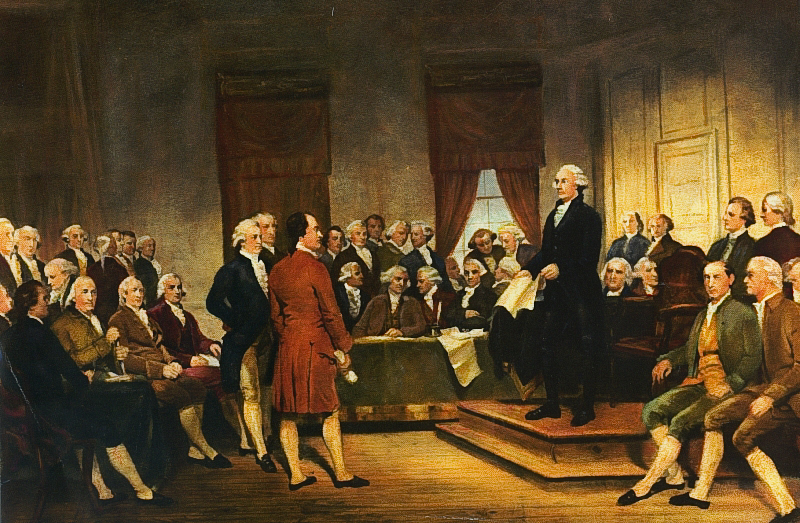
At the heart of the problem, however, is the fact that most of the public "argument" (such as it is) is based on faulty premises and a critical misunderstanding of history. Fueling the fight against the "socialistic" policies of the Obama administration is a badly painted picture of life at the birth of our republic, and the character of the (white, propertied) men who wrote the Constitution--and this dooms reason from the beginning.

No claim based on problematic reasons can ultimately succeed without rhetorical smoke-blowing and obscuring evidence to the contrary. Thus, many of the claims that opponents of "Obamacare" offer, for example, are supported by scary suggestions (not evidence) that health care reform will ultimately bankrupt our children, or that it will drive Granny to an early grave. Now, I'm more than willing to listen to your views, but only if you ground them in evidence; if the evidence is lacking, you can't just make stuff up. So if you're going to argue that "the Government" is violating the Constitution, be sure you've read it carefully, read commentary on what the articles mean (from more than one source), and pay some serious attention to the context in which it was written.

According to U. S. census figures for 1790, the first year a census was held, the population of the country in the year after the Constitution was ratified numbered around 4 million people. The figure for 2010 is upwards of 309 million. In 1790 there were no major roads, no electricity, no natural gas lines, no safe, reliable water supply--and thus no real upkeep or major infrastructure issues to fund. The U. S. Treasury fact sheet on the history of taxation notes that early taxes were raised from sources that varied widely from state to state:

Before the Revolutionary War, the colonial government had only a limited need for revenue, while each of the colonies had greater responsibilities and thus greater revenue needs, which they met with different types of taxes. For example, the southern colonies primarily taxed imports and exports, the middle colonies at times imposed a property tax and a 'head' or poll tax levied on each adult male, and the New England colonies raised revenue primarily through general real estate taxes, excises taxes, and taxes based on occupation.

One of the causes of that war, in fact, was the felt need of England to levy taxes on the colonies to pay for its wars abroad. The last straw was the tax levied on tea--and this seems to have also led to the future reluctance of American citizens to pay any taxes. The modern "Tea Party" seems to have forgotten that the battle cry of the tax protesters in 1773 was "Taxation without representation is tyranny." Like 'em or not, however, both houses of Congress are made up of elected representatives these days--so we're hardly being taxed without representation. If we don't like the results, we can throw the bums out. Which happens about every two years.

The point toward which I'm meandering is this: things are mighty different today than they were then. We no longer restrict the vote to propertied white males. There are gazillions more of us, a huge national transportation system that includes highways, railways, and airways, enormous electrical grids, gas pipelines, and all the other bits of technology that glue us together as a nation. And despite our overall wealth (even in these just-post-recession times), we do not have a measurably higher standard living than other developed countries that tax themselves silly.

Comparing the country now to the colonies in 1776 (or even the United States in 1790) is ridiculous. It's like comparing Adam Smith's idea of capitalism (kept in reign by the Invisible Hand) to the kind of capitalism that led to the recent depression. We're not even talking apples and oranges here; it's more like apples and lawn furniture.

The main purpose of government is to look after the public good by overseeing what can't be handled effectively by individuals or by individual states. And the first responsibility of governed citizens is to participate in their governance by electing representatives who have that good at heart. In order to do so, however, we have to be knowledgeable about processes and context; we can't just hop off and vote for any knucklehead who puts up a scary ad. The best defense against tyranny is an educated populace.

Now that the Supreme Court has declared that groups (corporations, unions, non-profits, and others) count the same as individual citizens, the job of educating ourselves becomes more difficult, because we have to be able to peel away all the subtexts that inform the ads that can be funded anonymously in favor of or against particular candidates. And because we've become not only less well-educated about but also less involved with national politics, we're much more susceptible to scare tactics and misinformation. On top of it all, we now get most of our news from commentators and pundits (whether Glen Beck or Kieth Olbermann) who specialize in verbal heat, rather than from reading newspapers and mulling over differing positions.

In the end, our value as citizens, and our ability to solve problems and insure the survival of the republic depends significantly on education. The more, the better, according to a 2005 report from the College Board. Participation in our own governance occurs in several ways, not the least important of which are through voting and paying taxes.

Now, I know the post-election mantra is all about reducing taxes. Some folks seem to think these are nothing but an imposition, and are used only to fund welfare queens and deadbeats. But in a country as large as ours, that depends so completely on the condition of its economic delivery systems (like transportation and other infrastructure), we cannot keep going without taxes. And the more prosperous we are, the more we seem to depend on these same systems--which means that our taxes need to be commensurate with our use of national facilities.

Remember that we all breathe the air, we all used the interstate highways, we share large public water sources, and so we do need oversight to keep individual states from deciding that they don't give a whiz about anybody else. (And if you think states don't do this, you don't live in Texas.) That means that in addition to paying taxes, we need to make sure the government regulates commerce to the extent that it affects individual citizens within the larger structure of the nation.

Education is about much more than just getting a job that pays well. A good education will provide us with worthwhile, interesting work that's more than just a paycheck. But it also helps us to fulfill our obligations as citizens by providing us with tools: critical thinking and mathematical skills (so we can evaluate arguments and understand statistics), historical perspective (so we remember what really happened in the founding years of our nation), and the general ability to articulate our positions and beliefs in order to make our voices heard.

It's extremely important to remember, in these almost radically anti-intellectual times, that our founding fathers were much better educated than most of us are today. Many of them read Greek and Latin, knew the classics, and were well-acquainted with the Enlightenment philosophies of their contemporaries: John Locke, David Hume, Immanuel Kant, George Berkeley, Adam Smith, Thomas Reid, Thomas Hobbes. Some of them, notably Benjamin Franklin, Alexander Hamilton, Thomas Jefferson, Thomas Paine, and James Madison, occupy the same pantheon as the Enlightenment thinkers from Europe.

I doubt seriously that many of those touting their love of the Constitution as a reason for opposing the duly elected President and Congress could hold a conversation with any of these guys--much less really understand what they were espousing. This isn't just an indictment of the noisy Right, but also of an uncritical Left. The architects of our government disagreed on many issues, but they were united in their belief that they could build a solid, enduring alternative to colonial rule.

I really hope we don't prove their faith to be ill founded.

Image credit: Junius Brutus Stearns, Washington at Constitutional Convention of 1787, 1856. Via Wikimedia Commons.

Wednesday, September 1, 2010

The Gainful Employment Debate

The current kerfuffle over the Education Department's efforts to make sure folks get what they pay for in higher education has, understandably, caused a bit of a stir in our hallowed halls.

Rather than offer my own view here, primarily because I'm still working through the arguments, I thought it might be helpful for my students and colleagues if I were to list some online sources that offer various perspectives.

The proposed legislation itself can be found here via the Federal Register, from the Department of Education: http://www2.ed.gov/legislation/FedRegister/proprule/2010-3/072610a.html

A Summary of the Advisory Committee's Hearing (Department of Education's Advisory Committee on Student Financial Assistance) includes testimony from interested parties.

The Chronicle of Higher Education weighed in with this article, Federal Proposal Could Jeopardize For-Profit Programs, Especially Bachelor's Degrees. Another article from the Chronicle offers another perspective: For-Profit Colleges Offer Another Way to Measure 'Gainful Employment.'

Inside Higher Ed pretty much defined the issue last December when it published its article on Defining Gainful Employment. A subsequent article from April was one of the first volleys fired in the most recent barrage of commentary. Going Ahead With Gainful Employment continues the discussion on the issue. Related articles are linked in the side bars.

The PBS program, Frontline, featured a segment called College, Inc., about the proliferation of for-profit colleges. The link is to the feature website, which includes teaching materials and student handouts with charts and statistics.

Greenwood and Hall, a consulting firm that focuses on relationships has published an interesting article that offers some solutions: Gainful Employment into Gainful Advantage: How Non-Profits and For-Profits Can Turn the Tables.

A Google search on "Gainful Employment Act" serves up a number of other sources, but those I've listed above provide fairly clear perspectives for those interested in constructing reasonable arguments and responding appropriately. Numerous proprietary schools have made public statements, and consumer groups and other interested parties are weighing in as well.

Stay tuned.

Image credit: The second panel from Louis Comfort Tiffany's Education, 1890, via Wikimedia Commons. This is the "science and religion" segment, situated between "art" on the left and "harmony" on the right.

Saturday, May 29, 2010

Back to the Future

Nincompoopery is still alive and well in Texas, no thanks to our current Board of Education and its insistence that Joe McCarthy be rehabilitated and considered in a more positive light than he had been previously in the state-wide social studies curriculum.

This is, of course, the same board responsible for wanting Thomas Jefferson omitted from discussions about the philosophical grounding of the nation, primarily because he advocated erecting a wall between church and state (designed, as I remember it, to keep the state out of the church's business). Jefferson (my father's favorite founding father, and to whom I was referred for sound political advice at my father's knee--as soon as I was old enough to ask questions) was eventually reinstated, but the denial associated with Sen. McCarthy stayed in.

No sooner have I begun to absorb this latest absurdity, when newly-crowned Kentucky Republican Senatorial candidate Rand Paul admits to Rachel Maddow, God, and everybody, that even though he abhors racial discrimination himself, people seem to have a basic right (in his view, anyway) to discriminate against anybody they please.

Remember that Santayana guy? You know, the one who told us that if we forget history, we're condemned to repeat its mistakes? Remember that Orwell guy, who showed us what it would be like if rewriting history were to become national policy?

Not that anybody seems to be reading much history these days anyway, but shouldn't we be able to look back and admit that we were once stupid, and we managed to fix things and become less stupid?

We once thought it was okay (or even a right) to think that folks of a different color or religion were somehow less than human, and therefore didn't need to be treated like one of "us." But, thanks to the Civil Rights Act of 1964, for which Rand Paul's now not sure he would have voted (because it infringes on white peoples' right to discriminate?), we're required by law to treat everyone as a fellow human being, at least in public facilities.

Some people once thought that it was okay to accuse people of treason on hearsay, and to put them in jail (or otherwise ruin their lives) if they didn't agree with a very particular political view. Socialism was at very least a thought crime in this perspective, and any opinion not deemed "American" or patriotic enough got a significant number of people fired, blacklisted, or worse.

As white as I am, and as secure in my Anglo-Saxon protestant heritage, I'd be in serious trouble today with my communitarian political pronouncements and my adopted Judaism. I could be blacklisted by McCarthy and/or refused service in a bar by Paul. Of course this is a silly notion as it stands, and makes light of serious problems since I'm not really a member of an oppressed group (unless you count women, but that's a whole other rant); the implicit danger is nonetheless disturbing.

The sheer absurdity of these actions is pale comfort in times when critical thinking has given way to emotional ranting, and my inadequately prepared students struggle to be able to support an opinion with evidence or reasons.

My forays into training students to conduct effective research over the last couple of weeks have discouraged me more than I thought possible. Not only is it difficult to make them understand that curiosity is an important aspect of creativity, but they can't seem to divorce themselves from the idea of doing research is inexorably connected with a plastic notion of "research papers" as taught in high school.

Gone is the idea of essaying into a topic, a la Montaigne, posing questions, meandering through discoveries unearthed in the process of answering them, and ending up somewhere unexpected. No, the idea of "doing a research paper" is confined to coming up with a thesis and proceeding to "prove" it. Students rarely use evidence against their basic notion in their papers--even if they do manage to configure a search that locates any. Instead, they home in on statements, frequently out of context, that support what they assume, use them (usually badly quoted), slap in a few in-line citations (if we're lucky), and turn in the result.

Although this is not what my assignments ask for (I want them to use research to inform their solutions to design problems, and then write essays that describe the process involved), it's what I all too often get.

Unless educators can figure out how to stem the tide of abject irrationality that threatens to overwhelm higher education once we start enrolling the products of the absurdist theater performance going on in Austin, our jobs are only going to get tougher and tougher.

And unless adult citizens in this country start thinking again, rather than yelling and waving badly-phrased slogans decorated with tea bags, the likes of Rand Paul are going to get into office and make it easier for closet racists to claim that their inalienable rights are being violated if they're told to serve that black guy who comes in and sits down at the counter. Rachel Maddow's tuning fork analogy reminds us that when some national figure is talking about an issue, he or she is likely voicing the views of many like-minded constituents.

If everyone really wants good government (even if what they mean by "good" is "less"), better policies, wiser spending, and other measures of a sound political economy, we have to start by allowing our students to engage in thoughtful research, critical evaluation of evidence, and cogent reasoning. This can't be done if we spend all of our time screaming at one another, ignoring bad mistakes, or burning books--even if the burning is only figurative.

Looking backward, acknowledging our mistakes, correcting them, and preventing similar mistakes in the future requires a rational and reflective turn of mind. Our students deserve to know how to do this, because they're the ones who are going to have to correct the mistakes we're making right this minute.

Image credits: the McCarthy photo is from Wikimedia Commons; I messed with it.

Wednesday, April 7, 2010

Lords of the Flies

I know the title of this post repeats the observations of many people commenting on the current rash of bully-stories in various media. But it seems so utterly appropriate that I had to succumb.

The stories themselves are raw meat to the sensationalist television appetite currently in evidence. If a story isn't gross or gruesome or painful in some way, it's not worth reporting.

It shouldn't be surprising, then, that when a young Irish immigrant hangs herself after suffering severe bullying in a Massachusetts high school, the news shows and papers are full of it, and the pundits are after the story from all directions, left, right, and center.

What I don't understand is why anyone is surprised by any of this. We are allowing our children to raise one another, without much in the way of parental supervision or real guidance, and then we look for scapegoats (pardon me, causes) when they turn into monsters out of a George Orwell novel.

Don't get me wrong. I do not think the answer is helicopter parents who whirl around their kids and stuff their schedules with all manner of "activities" to keep them from becoming "bored" and then shower them with technological gizmos that remove the little darlings further and further from reality.

But children--even teen-aged children--should not be left unsupervised for long periods of time, encountering only their peers who don't know anything more than they do. In order to become responsible adults, children need to be educated, and they are quite simply not equipped to educate one another.

The roots of both "education" and "pedagogy" involve leading: leading out into the world, leading children. When we leave the process to the children themselves, we set up a situation in which the blind are leading the people who can't see very well. Some of these kids may have some experience of the world, but--in light of how we're raising them these days--that experience is highly restricted, mostly by technology.

I mentioned on the Farm the other day that one of my parents' most enduring gifts to me was the chance to live among Japanese and Chinese people, rather than Americans, when we were stationed in Japan and Taiwan. But another gift that I'm only now able to assess (because I thought I was terribly deprived at the time) was limited time with people my own age. Most of my life out of school was spent with adults: writers and reporters at the Foreign Correspondents Club and the Friends of China Club in Taipei, my father's fellow NCOs at his base, our "household staff" (a couple I regarded as my second parents, the "houseboy" and his wife, Lee and A-qui).

When I was with my friends, we were constrained by an invisible net of etiquette: the knowledge that our behavior reflected on the American community in Taipei, so that lapses in judgment or inappropriate displays in public were treated as major infractions and punished accordingly. We were trained to be little ambassadors, and most of us took this role seriously. There were the occasional goofballs who ended up embarrassing everyone, but I was fortunate not to encounter any of those--probably because they didn't attend the Catholic international school where Mother Superior reigned supreme and didn't put up with any crap from uppity children.

Eventually I came to value my close interaction with adults, and I think it provided me with terrific role models: successful writers and cartoonists, diplomats, nuns, priests, bishops, missionaries, translators, career military people, Taiwanese intellectuals, and a variety of European business folk.

Modern kids don't seem to have many opportunities like these; they not only don't have my weird and wonderful parents, but they also seem to be living in a different universe: one that values virtual reality over the real world, one that devalues intellectual pursuits, and one that worships youth and a comic-book concept of beauty.

I don't know what to do about bullies. We may already be too far down the line to do much but sit back and watch the coming apocalypse. But if we want to save the next generation, we almost certainly have to start spending our time with them, leading them away from the mob, containing some of their freedom with real education and companionship. How are they possibly going to learn to be responsible adults if their time with real role models is limited to a few hours with teachers every day, and a very few transient moments with parents?

If we bring children into the world, it really is our responsibility to lead them out into it--not to let them find their own way among their own kind, let loose to run around the island, deciding for themselves who should be "king" and who should be voted off.

Image credit: The Education of the Children of Clovis, by Sir Lawrence Alma-Tadema, 1861, via Wikimedia Commons.

Saturday, March 13, 2010

Educational Secession

I am becoming increasingly grateful that I no longer have to deal with school-age children, and do not envy in any way the choices friends with kids are having to make these days.

Although I was all set to extol the virtues of the Dallas Independent School District's current attitude about the value of school gardens as teaching tools (after having posted on the demise of one such garden a couple of years ago), all optimism was immediately dashed when the news hit the fan about what the Texas Board of Education is planning to do to social studies across the state.

If I had ever harbored any doubt about what I would do if I had to do it all over again, I have now been completely won over to the home school camp. Not only would my kids have a garden from which to learn real science, but they wouldn't have doctrine of any sort (religious or economic) shoved down their little throats. Fortunately for us, the Texas State Board of Education (SBOE) wasn't full of ideologues when my children entered public schools, and they were pretty much allowed to study a large variety of viewpoints and to make their own intellectual decisions about the worth of various arguments. I saw little evidence of any particular bias in any of what they had to read, and since I made sure that they had access to primary sources to consult in order to get at the real meat (rather than the text-book pabulum most schools teach from) of important events, they could always follow through on questions that arose from various topics.

Long gone, however, are the days when eleventh graders are asked to write papers like the one I picked out of a hat for my Junior American History and English thesis: "An Examination of the Concept of Property Rights as Contrasted in the Writings of John Locke and Thomas Paine." To write the paper, I had to read Locke and Paine and to explicate their positions. I can't even imagine that this could happen today, because the students who show up in my own classes rarely even understand how to support an argument, and most don't seem to have heard of either Locke or Paine.

In Texas these days, Thomas Jefferson (my own father's hero) is a bad guy (for having coined the notion of the separation of church and state), and Phyllis Schlafley and the Eagle Forum have been elevated to the pantheon of historical importance once occupied by Jefferson himself. I suppose that I should be thankful that Sarah Palin's tweets haven't made it onto the list of required reading (yet).

At the same time that this silliness is taking place here, the rest of the country (with the notable exceptions of Texas and Alaska) is busy scrambling to come up with a uniform set of standards students will be expected to reach by the time the leave public schools. No Child Left Behind has resulted in the lowering of standards in some cases, so the latest effort seeks to raise the bar and expect more, rather than less, of our graduates. Alaska and Texas are the only states that declined to participate in the standards-writing effort, and according to the New York Times article by Sam Dillon, "In keeping his state out, Gov. Rick Perry argued that only Texans should decide what children there learn."

What Perry and his revisionist crew don't seem to understand is that our students are neither naive nor fundamentally stupid. Many of them graduate from high school without being fluent in English grammar, basic mathematics, or even general history and geography, but they do seem to know when they've been hoodwinked. My students, once given the opportunity to learn for themselves, seem to rise to the occasion quite well, despite the handicap of a mediocre public education. In some cases, it's as if the blinders are being removed from their eyes when I encourage them to answer their own questions. I can only hope that the new social studies requirements don't completely numb the inquisitive and make it that much harder for them to learn once they've been set free from what passes for education in this state.

In the quest for academic excellence, at least, Texas seems already to have seceded from the Union. One can only imagine what future graduates of Texas schools will have to overcome should they choose to seek jobs and/or further education outside of the state. But maybe the SBOE just wants all its graduates to stay in Texas. The Lone Star State will, of course remain totally unaffected by climate change, peak oil, or any of the other problems concocted, according to our esteemed politicians, by left-wing alarmists bent on destroying our free enterprise system. We can't even call it capitalism any more, because that's also been sullied by the left.

It's just as well, I guess, because the next generation of Texas graduates would have been taught that none of this will happen--or that if it does, it's all part of God's plan.

And if we're bent on purging figures the SBOE doesn't like from the ranks of historical importance, it probably wouldn't take too much work to alter the figure of Jefferson on Mt. Rushmore to make it look like Phyllis Schlaffey--if the gang of five on the Texas Board of Education could persuade South Dakota to go along.

Photo Credit: Mt. Rushmore, Thomas Jefferson Up Close, by Scott Catron, via Wikimedia Commons.

Thursday, February 18, 2010

Long-term Problems; Short-term Brains


Tom Friedman has a way with words, choosing pithy combinations to describes equally pithy phenomena. Not only is the world as he describes it hot, flat, and crowded, but we're now suffering from the best possible term for our current climate situation: Global Weirding.

In his column in yesterday's New York Times (reprinted today in the Daily Poop), Friedman describes the logical dysfunction attached to "discussions" about climate change (the current record snowfalls prove that we're being hoodwinked by scientists and their political hacks about global warming) as one of the "festivals of nonsense that periodically overtake American politics."

Amen, Brother.

America's greatest failing, despite its self-description as a visionary country that sees its future wrapped in manifest destiny, is that we are, as a population, the most myopic nation in the modern world. And it's getting worse, because once upon a time our collective brain operated on a four-year cycle; now, however, it's turned into a two-year cycle and is grounded not in carefully thought-through policy, but turn-on-a-dime popular sentiment as measure in polls.

Whereas climatic cycles work on a very long, intricate global scale, American "thinking" about important issues that affect everyone on the planet operates on a short-attention span that's often only as large as one's household, and seldom larger than one's state. If it's snowing outside my front door (or in my town, or somewhere else in Texas), the world's temperature can't possibly be rising, and we need to harvest the oil in the Barnett Shale or we're all gonna die next week, or the economy is going to collapse, or (around here, anyway) the Second Coming is nigh.

At the same time, we're mired in an educational system that talks a great deal about improving science education while harping about how Intelligent Design needs to be taught in our public schools because "Darwinism" (apparently a religion that worships evolution) is "only a theory"--and thus only as stable as any opinion. Don't teach kids anything scientific about sex, either, because sex education is the purview of parents. Schools need to teach them to wait until marriage, but that's it--and, of course, Texas ends up at the top of teen pregnancy rates and toward the bottom of SAT scores.

I know that this amounts to a very simplistic analysis, but given what my students know about science (very little) and how many of them already have children (no, I haven't polled them, but the most common excuse for missing class is child-related), I'm thinking that science and sex ed are bound together in Texas in some significant manner. Wouldn't good, comprehensive biology programs, for example, clue the kids in that 1 + 1 often equals more than two?

What I love best about Friedman's article is his call for a colloquium of climate scientists (although, one letter-writer to the Daily Poop a while back claimed that there's no such thing as "climate science") that would produce a simple paper describing "What We Know." His coining of "Global Weirding" is particularly apropos, because "what actually happens as global temperatures rise and the climate changes. The weather gets weird. The hots are expected to get hotter, the wets wetter, the dries drier and the most violent storms more numerous." And it snows for two days in north Texas, causing the fossil fuel lobby to jump up and shout that we need to dig that shale or carve up Alaska or else.

The saddest thing about this whole mess is that our students--the very ones we're failing to educate on how to solve scientific problems--are the ones who will begin to suffer most from our lack of foresight. I'll be long gone before the worst of it all begins to manifest itself, but my children's cohort and their offspring, and all those babies our kids are popping out in Texas will have to figure out how to live on an increasingly weird planet.

Image credits: NASA Arctic Temperature Change 1981-2007; Thomas Friedman in 2003 by Charles Haynes. Both from Wikimedia Commons.