Saturday, March 13, 2010

Educational Secession

I am becoming increasingly grateful that I no longer have to deal with school-age children, and do not envy in any way the choices friends with kids are having to make these days.

Although I was all set to extol the virtues of the Dallas Independent School District's current attitude about the value of school gardens as teaching tools (after having posted on the demise of one such garden a couple of years ago), all optimism was immediately dashed when the news hit the fan about what the Texas Board of Education is planning to do to social studies across the state.

If I had ever harbored any doubt about what I would do if I had to do it all over again, I have now been completely won over to the home school camp. Not only would my kids have a garden from which to learn real science, but they wouldn't have doctrine of any sort (religious or economic) shoved down their little throats. Fortunately for us, the Texas State Board of Education (SBOE) wasn't full of ideologues when my children entered public schools, and they were pretty much allowed to study a large variety of viewpoints and to make their own intellectual decisions about the worth of various arguments. I saw little evidence of any particular bias in any of what they had to read, and since I made sure that they had access to primary sources to consult in order to get at the real meat (rather than the text-book pabulum most schools teach from) of important events, they could always follow through on questions that arose from various topics.

Long gone, however, are the days when eleventh graders are asked to write papers like the one I picked out of a hat for my Junior American History and English thesis: "An Examination of the Concept of Property Rights as Contrasted in the Writings of John Locke and Thomas Paine." To write the paper, I had to read Locke and Paine and to explicate their positions. I can't even imagine that this could happen today, because the students who show up in my own classes rarely even understand how to support an argument, and most don't seem to have heard of either Locke or Paine.

In Texas these days, Thomas Jefferson (my own father's hero) is a bad guy (for having coined the notion of the separation of church and state), and Phyllis Schlafley and the Eagle Forum have been elevated to the pantheon of historical importance once occupied by Jefferson himself. I suppose that I should be thankful that Sarah Palin's tweets haven't made it onto the list of required reading (yet).

At the same time that this silliness is taking place here, the rest of the country (with the notable exceptions of Texas and Alaska) is busy scrambling to come up with a uniform set of standards students will be expected to reach by the time the leave public schools. No Child Left Behind has resulted in the lowering of standards in some cases, so the latest effort seeks to raise the bar and expect more, rather than less, of our graduates. Alaska and Texas are the only states that declined to participate in the standards-writing effort, and according to the New York Times article by Sam Dillon, "In keeping his state out, Gov. Rick Perry argued that only Texans should decide what children there learn."

What Perry and his revisionist crew don't seem to understand is that our students are neither naive nor fundamentally stupid. Many of them graduate from high school without being fluent in English grammar, basic mathematics, or even general history and geography, but they do seem to know when they've been hoodwinked. My students, once given the opportunity to learn for themselves, seem to rise to the occasion quite well, despite the handicap of a mediocre public education. In some cases, it's as if the blinders are being removed from their eyes when I encourage them to answer their own questions. I can only hope that the new social studies requirements don't completely numb the inquisitive and make it that much harder for them to learn once they've been set free from what passes for education in this state.

In the quest for academic excellence, at least, Texas seems already to have seceded from the Union. One can only imagine what future graduates of Texas schools will have to overcome should they choose to seek jobs and/or further education outside of the state. But maybe the SBOE just wants all its graduates to stay in Texas. The Lone Star State will, of course remain totally unaffected by climate change, peak oil, or any of the other problems concocted, according to our esteemed politicians, by left-wing alarmists bent on destroying our free enterprise system. We can't even call it capitalism any more, because that's also been sullied by the left.

It's just as well, I guess, because the next generation of Texas graduates would have been taught that none of this will happen--or that if it does, it's all part of God's plan.

And if we're bent on purging figures the SBOE doesn't like from the ranks of historical importance, it probably wouldn't take too much work to alter the figure of Jefferson on Mt. Rushmore to make it look like Phyllis Schlaffey--if the gang of five on the Texas Board of Education could persuade South Dakota to go along.

Photo Credit: Mt. Rushmore, Thomas Jefferson Up Close, by Scott Catron, via Wikimedia Commons.

Thursday, February 18, 2010

Long-term Problems; Short-term Brains


Tom Friedman has a way with words, choosing pithy combinations to describes equally pithy phenomena. Not only is the world as he describes it hot, flat, and crowded, but we're now suffering from the best possible term for our current climate situation: Global Weirding.

In his column in yesterday's New York Times (reprinted today in the Daily Poop), Friedman describes the logical dysfunction attached to "discussions" about climate change (the current record snowfalls prove that we're being hoodwinked by scientists and their political hacks about global warming) as one of the "festivals of nonsense that periodically overtake American politics."

Amen, Brother.

America's greatest failing, despite its self-description as a visionary country that sees its future wrapped in manifest destiny, is that we are, as a population, the most myopic nation in the modern world. And it's getting worse, because once upon a time our collective brain operated on a four-year cycle; now, however, it's turned into a two-year cycle and is grounded not in carefully thought-through policy, but turn-on-a-dime popular sentiment as measure in polls.

Whereas climatic cycles work on a very long, intricate global scale, American "thinking" about important issues that affect everyone on the planet operates on a short-attention span that's often only as large as one's household, and seldom larger than one's state. If it's snowing outside my front door (or in my town, or somewhere else in Texas), the world's temperature can't possibly be rising, and we need to harvest the oil in the Barnett Shale or we're all gonna die next week, or the economy is going to collapse, or (around here, anyway) the Second Coming is nigh.

At the same time, we're mired in an educational system that talks a great deal about improving science education while harping about how Intelligent Design needs to be taught in our public schools because "Darwinism" (apparently a religion that worships evolution) is "only a theory"--and thus only as stable as any opinion. Don't teach kids anything scientific about sex, either, because sex education is the purview of parents. Schools need to teach them to wait until marriage, but that's it--and, of course, Texas ends up at the top of teen pregnancy rates and toward the bottom of SAT scores.

I know that this amounts to a very simplistic analysis, but given what my students know about science (very little) and how many of them already have children (no, I haven't polled them, but the most common excuse for missing class is child-related), I'm thinking that science and sex ed are bound together in Texas in some significant manner. Wouldn't good, comprehensive biology programs, for example, clue the kids in that 1 + 1 often equals more than two?

What I love best about Friedman's article is his call for a colloquium of climate scientists (although, one letter-writer to the Daily Poop a while back claimed that there's no such thing as "climate science") that would produce a simple paper describing "What We Know." His coining of "Global Weirding" is particularly apropos, because "what actually happens as global temperatures rise and the climate changes. The weather gets weird. The hots are expected to get hotter, the wets wetter, the dries drier and the most violent storms more numerous." And it snows for two days in north Texas, causing the fossil fuel lobby to jump up and shout that we need to dig that shale or carve up Alaska or else.

The saddest thing about this whole mess is that our students--the very ones we're failing to educate on how to solve scientific problems--are the ones who will begin to suffer most from our lack of foresight. I'll be long gone before the worst of it all begins to manifest itself, but my children's cohort and their offspring, and all those babies our kids are popping out in Texas will have to figure out how to live on an increasingly weird planet.

Image credits: NASA Arctic Temperature Change 1981-2007; Thomas Friedman in 2003 by Charles Haynes. Both from Wikimedia Commons.

Sunday, January 31, 2010

Hooked Into Machine

I'm not terrifically fond of popular music, but I do rather like Regina Spektor, the irreverant young songwriter/singer/pianist whose latest album, Far, has helped me get to work lately. Her stuff is witty and melodic, with odd jazzy/bluesy vocal riffs, and some amusing social commentary.

One of the songs gives this post its title, and my riff is on the currently popular propensity to stay constantly plugged in to one machine or another--and sometimes many. In many ways this phenomenon is connected to some of my remarks in The Multitasking Myth from some weeks back. It's undoubtedly also connected to the huge (and growing) number of ADHD diagnoses being thrown around, but that's for another day, and another rant.

In "Eet," Spektor touches another of my nerves with the lines,

you spent half of your life
trying to fall behind

your ears in your headphones, to drown out your mind


--yet she's far more sanguine than I, as she notes at the end of "Machine":

and you live in the future
and the future
it's here, it's bright, it's now

Of course, I live in the future of which I was terribly afraid as a child. I am, after all, part of that post-war generation that practiced "duck and cover" and (because I lived in Japan in the early fifties) air raid drills. When we lived on base we kept a packed suitcase under each bed, and when the sirens went off, we grabbed them and headed down to the basement of the concrete GI housing complex ("Green Park" it was called, rather ironically).

This probably accounts for my chronic suspicion in regard to technology in general, even though I haven't always been quite so reluctant to adopt new gadgets. My aunt bought me a little turquoise transistor radio for $5.99 in 1964, and I still have it. It was my lifeline to California during my first Texas exile; occasionally, late at night, I could get KRLA if the bounce was right; if not, KOMA, from Oklahoma City played much the same kind of music. I wasn't nearly as much of a music snob then as I am now, and the surfer rock played continuously, ever reminding me that I was really far from any ocean. I did not, however, own a set of headphones.

We also didn't watch much TV when I was growing up, even when there was one in the house. And my daughter was a year old before I bought my first color television set, all 13 inches of it, in 1980, so I could watch Cosmos and she could watch Sesame Street in color. I'm pretty sure we had a computer (a Commodore 64 first, and then an IBM clone, called a Clone) before we ever got a bigger TV. I was only peripherally aware of the possibilities offered by computers, but my first gig as a teaching assistant was in the microcomputer center at UTD, tending to early PCs and Mac SEs. Even my first teaching job at the Art Institute was using Apple 2Es to teach computer literacy.

What being around my children taught me, however, was to be selective about my technologies, because I saw how fast kids latch on to things, without questioning their real necessity or even utility. Children are little information siphons, and anything new that feeds them data (no matter what kind) is on that year's birthday or Christmas wish list. I am to this moment grateful beyond measure for the fact that cellular phones were not widely available in this country while my children were growing up.

These days I have to practically beg my students to disconnect for an hour and a half. Despite the fact that electronic devices of any sort are prohibited in the classroom, I constantly catch them sneaking peeks at their phones or even texting under the desk, oblivious to the fact that their very body language gives them away. Occasionally I'll make fun of them for trying to pull one over on me, but usually I just let it go. The real problem isn't just the lack of social graces and courtesy these little acts of rebellion demonstrate; it's the sense of quiet desperation reflected in the fact that they just can't turn the damned things off for even a few minutes.

It really is almost as though they're afraid to listen to themselves think.

Plugged relentlessly into headphones attached to their iPods or iPhones, they don't seem to be able to live without a soundtrack. Silence seems to scare the crap out of them. And why shouldn't it? They probably grew up with TVs on all the time, or tape players and radios and CDs in the car, computer games going night and day, Muzak in every store. I wonder how many members of generation X or Y have actually ever heard silence.

Even now, sitting at my desk on a Sunday afternoon in a quiet house, the furnace is going, the cars drive by, the ridiculous recorded church bells from nearly a mile away are tolling. The one truly pleasant sound is the occasional snore from one of the dogs.

This morning I was reading a book I bought yesterday, Land Arts of the American West by Chris Taylor and Bill Gilbert. It's a compendium of images and text resulting from a project involving the College of Fine Arts at the University of New Mexico. It's designed, according to the Introduction, to "explore the large array of human responses to a specific landscape over an extended period of time." Some of what it features are works by people I've lectured on in the past--Robert Smithson, James Turrell, Nancy Holt, Michael Heizer, Lucy Lewis's daughters--as well as landscapes of which I am particularly fond--Chaco Canyon, Wupatki, Sunset Crater, and a big chunk of Western desert. The book is stunning and inspiring, and as I was writing this essay I remembered one of the things I love best about these spaces: their silence.

Except for wind and birdsong, there is little in the way of noise out in the middle of nowhere. Sometimes it's so quiet, one can hear the sound of a bug walking across sand, or a lizard skittering across a rock. Sand itself seems, despite the hard surfaces of the grains, to absorb sound into its interstices, muffling the world around it. A thumping great wind can blow up out of nowhere and change all that, but in the end everything goes back to silence.

Yesterday I thought the battery in my iPhone was shot, and I played around with the idea of upgrading to a 3GS (mine is a first-generation 2G). I even mooned around on the Apple website lusting after a MacBook Pro (one of my students let me play with his the other night and I was smitten). In the end, though, the problem turned out to be my car charger, and the battery is working just fine now. So I get to put off the decision a bit longer--like I did with getting the phone in the first place. I've only had it for two years, and I only got it because nobody could reach me when my daughter had to have an emergency appendectomy. So I ended up with a phone not for myself, but to put my family at ease.

Now, of course, I depend on the bloody thing far too much; but it helps me keep in touch, even though I don't really use it all that frequently. I read the New York Times on it more often than I phone anyone; I've never listened to music on it; I'm not even sure how to use some of the basic apps. So no, I won't be getting an iPad any time soon.

I am, however, still daydreaming about the MacBook Pro.

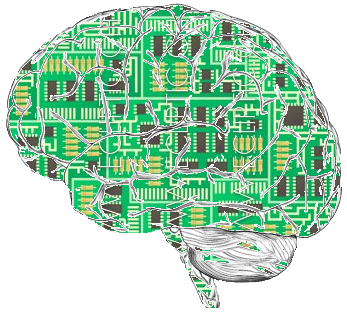
Image credit: Ghengiskanhg, "Artificial Fiction Brain" via Wikimedia Commons.

Saturday, January 9, 2010

The Case Against Textbooks

As more and more colleges agonize over the rising cost of textbooks, I would like to don my Swiftian hat here and make a modest proposal.

And, no, it has nothing to do with creating baby-skin lampshades.

Rather, I would suggest that institutions of higher learning get smart, talk back, and tell the textbook companies where to shove it.

I can say this because I never once used a "textbook," either as an undergraduate or a graduate student, at any of four major universities I attended: the University of California at Riverside, the University of Pennsylvania, the State University of New York at Stony Brook, and the University of Texas at Dallas. This represents a fairly wide geographical range, and both private (Ivy League) and public institutions. I also have to admit that I'm excluding Greek and Latin grammars from the category of textbook. In the interest of full disclosure, I must also confess that I suggest to my History of Art and Design students that they buy a comprehensive art history survey, much as I suggest that they also have a copy of a good dictionary; I refer to both, but teach from neither.

In fact, I probably need to clarify what I mean by "textbooks" (as opposed to "texts," which, as all good postmodernists know, include anything that can be interpreted): books intended to teach a subject in broad introductory terms, in schools or colleges. They typically do not contain much in the way of original research or interpretation, but rather categorize and summarize information. They may offer a broad perspective on a topic, provide condensed historical or practical information, and are supposed to represent a kind of state-of-the-subject picture, especially in fields commonly taught in liberal arts institutions: history, the sciences, maths, and the humanities. I contrast these with the monographs that made up my education: books by the likes of Homer, Joyce, Swift, Goethe, Morris, and even the four evangelists and the writers of the Pentateuch.

Textbooks also tend to be written by committee (not necessarily a bad thing), profusely illustrated (also not necessarily a bad thing), and usually very expensive (in part because the aforesaid profuse illustrations and committees cost a great deal of money). They're also ubiquitous, and some colleges seem to be having fits about the cost of these books to students, and whether they should require them as actual or digital books. The proliferation of e-books and digital downloads makes it increasingly more likely that textbooks will become a permanent fixture in virtual reality, thus reducing the number of trees killed for spurious reasons--but the textbooks themselves will remain.

In addition, these books (especially the computer programming textbooks I used to illustrate the post) tend to contain material that becomes dated the minute new scholarship or new technologies emerge, so that they constantly need to be updated, new editions produced, and their prices increased, thus further exacerbating the problem. Since most software programs come with tutorials, why do instructors even need to assign textbooks in the first place?

So here's my solution. Nix 'em. Teach what you know, and write and develop your own materials. If you don't know the stuff, you shouldn't be in the classroom.

I saw one argument once that beginning teachers don't have enough experience to write their own curricula, and therefore absolutely must use a textbook written by an expert. If this is the case, what is it that they were learning in college or teacher-training programs?

I was told in a faculty development meeting just this week that I'm an expert. I sure as hell should be, after 190 graduate hours acquired during 15 years of full- and part-time schooling, not counting eight years of undergraduate education at top-notch schools. But what the facilitator meant is that we who teach are assumed to be experts in our fields. We've all got, at the very least, Master's degrees, and most of us have real-world experience related to what we teach. We all presumably spend many hours each year keeping up with current developments and advances in our subject areas, attend conferences, write peer-reviewed papers (or, in my case, blogs open to the scrutiny of any peers who happen by), participate in workshops, read monographs, subscribe to journals, and employ myriad other means to help us keep abreast and learn new stuff.

In addition to all these traditional resources, there's now the Worldwide Web, with online material that expands daily, the quality of which seems to improving all the time. Thanks to my laptop, the internet, and my college's library, I can now access millions of peer-reviewed articles, read major world newspapers, subscribe to the Chronicle of Higher Education, and commune with scholars and creative people all over the world. I can participate in virtual digs (I started out life as an archaeologist), read field reports, enjoy scholarly blogs, and take advantage of the TED lecture series. One of the most promising aspects of all this is the technology that allows me to read books online that I would never be able to even see in person except under glass or with hard-to-acquire special permissions: the Kelmscott Chaucer, Darwin's notebooks, Leonardo's sketchbooks. The means for perpetual learning are now quite literally at our fingertips.

So why are so many people so bent out of shape about spending preposterous amounts of money on textbooks good teachers don't really need? If we are indeed well-prepared enough to be "experts," why can't we be trusted to gather the material we need to teach our students what they need to know or, better yet, to provide them with the tools that make it possible for them to participate energetically in their own learning?

I suspect that there are several answers to these questions. Some beginning college instructors don't feel confident enough to strike out on their own, preparing their own lessons and assigning their own choices of primary texts and secondary works that could generate questions they might not be able to answer. If we're assumed to be experts, after all, we can't not know the answers. Although I'm not sure why the notion of "expert" implies "omniscient," this does seem to be a prevailing sentiment. And it creates a problematic model in the mind of the student: there is an answer; once we know it, we don't have go any further.

Another reason, I hesitate to mention for fear that I might sound accusatory, is intellectual laziness, which seems to be endemic in some schools these days. It's too much trouble to do all that work analyzing and collecting suitable readings. Why not order a textbook, where somebody's already done all that work for you? It's much more time consuming to select works and readings by great writers and thinkers, to locate ancillary materials, to search for appropriate websites in the growing pantheon of content-loaded interactive pages.

Oddly enough, though, it's considerably cheaper. A few paperback copies of significant works and PowerPoint slides built from images freely available on the web or through one's college library might well provide the basis for a top-notch humanities class. Surely the original works, some commentary, and some explication on the teacher's part, and a lot of healthy discussion and research would be far more interesting than slogging through chapter upon chapter of textbook condensations or pre-selected readings.

Still another explanation is the problem of suspicion or ignorance on the part of authorities--those in charge of running the show. An administration may have hired us, but because few of those who hire know what we know, they may not trust us enough to afford the kind of academic freedom that allowed us to become the well-trained, academically qualified, committed teachers that we are in the first place.

I fully realize that the academic world in which we now live is not the one in which I was educated. My teachers all knew well of what they spoke; they lectured, we took notes, asked questions, conducted research, wrote papers, discussed those papers, responded to critical assessments, and graduated from college and graduate school having learned the way people have learned ever since the idea of the university began in the Middle Ages.

That model is increasingly under attack in a world that demands interactivity, instant gratification, and entertainment--as well as "accountability" (which I suspect is engendered by our also increasingly litigious society). I quail to think of what high school is like these days after having read a feature essay in today's Daily Poop by a high-school Junior who likes the idea that libraries are now noisy, because it means that people have finally learned how to mix education with entertainment. I'm not sure how forty years of Sesame Street fits into her world. Maybe she missed it.

Ye gods and little fishes! What brave new world is this that has such people in it?!

For the moment, I'm out of steam. But I'll return for another chapter soon, perhaps with some suggestions for how to do what I say we should be doing.

Image credits: A row of computer textbooks uploaded by K.Lee; A detail from Jan van Eyck's The Madonna and the Canon Georg van der Paele, 1436; and Carl Spitzweg's wonderful The Bookworm, 1850 (I have a print in my study). All from Wikimedia Commons.

Tuesday, December 1, 2009

Bread and Circuses

The conflict between privacy and celebrity has finally reached the point of pure idiocy. Actually, it already had, but the recent flap concerning Tiger Woods (who has actually earned his fame) points to the absurdity with which modern media attend to matters that would once have been purely private.

I don't know why Woods slammed into a tree in the middle of the night. And unless it somehow affects national security (as the also-recent flap concerning party crashers at the White House might), I'm content to keep my nose where it belongs. In my own business.

But prurient interest in what goes on in other people's houses seems to have become an international pastime. Witness the tragicomic antics of the "new" royal family in Britain, where the intensity of this kind of curiosity seems to have ramped up, and of which I was reminded last night as we watched Helen Mirren's performance as Elizabeth II in Stephen Frears's film The Queen. Never having met QEII herself, I can only judge the acting job superficially, but I was completely taken in by the compelling portrayal of a woman caught between the worlds of restrained tradition and media frenzy.

Queen Elizabeth's initial reaction to Princess Diana's death seems to have been that even though Diana was a public figure, her funeral should be private (there were, after all, children involved here). But nobody in the public eye--especially anyone who has played the public for sympathy (whether deserved or not)--gets privacy any more. The outpouring of grief over Diana's death fueled tabloid hysteria almost to the point of conflagration, as if the papers and television realized that they were losing a cash cow and had to wring out every byline and lurid headline before the furor itself died out.

Nowadays, celebrity is being sought for its own sake. Andy Warhole's fifteen minutes of fame idea has become a life-goal for some people. Substance and accomplishment are no longer criteria of fame. Instead, publicity seems to be the sole measure: whoever can garner the most coverage becomes the news item du jour.

All this is one more indication of the shallowing (probably not a word) of the cultural pool of metaphor. No longer deepening through shared experience, interesting connections, or intellectual freshness, the pool of which I frequently speak is just plain drying up. Metaphors are becoming predictable and stale (like the fifteen minutes of fame quip itself), and even the word "like" (which used to signal an upcoming comparison) has become a vocal mannerism equivalent to "uh" or "you know."

The only still-rich sources of metaphor seem to be science and technology, but even these are turning out tropes based on the rampant growth of social media. So "tweet" and "twitter" no longer refer to sounds made by birds, but rather to noises made by people seeking fame in cyberspace. Science contributes to new words that refer to increasingly short attention spans: nanosecond and (frequently used inappropriately) quantum leap. A quantum is actually really tiny ("quantum theory deals with the tiniest things we know, the particles that atoms are made of"), rather like the brains of those who seem to be operating the news media these days. Ahem.

I don't really want to belabor my point (because, as you know, I tend to go on and on about things), but I do so miss the days when I didn't really know anything about the lives of those making the news. In fact, all I really care about Tiger Woods is how he plays golf. Although I appreciate the example he has been setting for young people, I'm not going to be using any sports figure as an example when it comes to raising children--unless, of course, that sports figure also turns out to be a Rhodes Scholar or a brilliant scientist or an inspiring teacher as well.

Metaphor is about complexity; the more we know, the more creative the connections we can make. Perhaps now is the time for us to turn off our television sets and bake our own bread. Who knows what would happen if we taught our kids to notice what happens when raisin bread rises, rather than what the latest talentless nincompoop is doing in the latest media circus.

Image credit: Henryk Siemiradzki, A Christian Dirce, nineteenth century. The painting depicts Nero with an executed Christian woman in his circus (Wikimedia Commons). Comparisons of current cultural events and those of imperial Rome are commonplace these days, but not inappropriate. For more on this topic, see Cullen Murphy's recent book, Are We Rome?

Monday, November 23, 2009

Songs of a Distant Earth

Last week I worked for two hours on a post (using Wordpad, which doesn’t have an automatic backup) before being thwarted by one of Microsoft’s incessant updates to Vista. I was using Wordpad in the first place because I often spend several hours on a post so I don't tend to do it online. But Word embeds so much code that it screws with Blogger’s layouts, so I compose in Wordpad. At any rate, I lost it, and haven’t been back since. But my purpose remained intact, even though I lost steam along with my prose.

The purpose of the original post was to assure anyone who happens upon this blog that, contrary to current popular silliness, the absolutely only thing of any importance scheduled to occur on December 21, 2012, is my sixty-fifth birthday. No, the world is not going to end—not even according to the Maya, misconceptions about whose calendar are at the source of popular culture’s latest charlatan show.

It’s actually a good thing that I didn’t post on this last week for a couple of reasons. The first is that I finally caught up with the November 8 edition of the New York Times’s entertainment section, in which Tyler Gray notes that Roland Emmerich’s film, 2012 (now enjoying huge monetary success and making my job measurably more difficult) isn’t the least bit interested in knowing why the Maya calendar “ends” on this particular date. Gray did the smart thing and interviewed David Stuart (who won a MacArthur “genius” grant when he was eighteen for his already significant work on Mayan language). Stuart points out that December 21, 2012 is simply the end of the latest Baktun and the beginning of the next.

The Maya were, in fact, pretty scientific (rather than prophetic) about their calendrical system, drawing on previous historical patterns to suggest what might happen next. I was amused at Stuart’s expectation that he’d be “dealing with Mr. Emmerich’s misuse of Maya history for his whole career. I just hope he’s right, however, in thinking that nobody will really take the movie seriously.

But there’s such a raft of idiocy plying the waves of the internet these days that I’m not all that sanguine; maybe folks won’t believe the movie, but they certainly seem to be tuning into the noise. I urge anyone who’s the least bit interested in the whole 2012 mishegoss to pick up the latest issue of Skeptic magazine (or the National Geographic page linked below), which does a good job of poking holes in twenty differently spurious claims about a variety of catastrophes supposed to occur three years from now.

My main beef with all this rigmarole is that it pokes two of my “buttons”: the demise of intelligent thought and the growing lack of understanding—especially among the American populaceof how science works.

What I don’t understand is why people are so gullible, and why Americans in particular seem to have chosen to be believers rather than scientists. American exceptionalism (the view that we’re special, not only politically and economically, but in the eyes of god) may be at the root of it. After all, the United States exists primarily because it was founded by colonists who wanted to practice religions opposed to or by established churches in the countries from whence they came, and since then politics and religion (though officially separated by a Constitutional clause meant to forestall the establishment of a state religion) have mixed pretty freely. If you're not a professed believer, and preferably a Christian believer, good luck being elected to public office.

But religion doesn’t automatically make one susceptible to goofy claims. The nuns responsible for my early education planted in my nascent brain a love of learning that especially loved learning science. Unfortunately, the more damaging aspect of American-style religion is its tendency to instill doubt in science, unlike mainstream religion in Europe. Recent polls are full of statistics showing that nearly half of Americans think that human beings were created within the last 10,000 years, and claim not to believe in evolution.

The number of people who “believe” in evolution rises significantly as the level of education increases, but asking people if they “believe” in evolution in the first place betrays a fundamental misunderstanding of how science works.

In terms of logic, the problem lies in the fallacy of equivocation: equating two words that mean different things in different contexts. The classic example is the word theory, which to most people represents an idea or even a guess; in science, however, a theory is a coherent explanation for observable evidence. Although there’s always room for falsification in science, theory “behaves” like law, in that experiments and practice are grounded in it.

So gravity is, in fact, “only” a theory, but we behave as though it’s a law, even though our ideas about what it entails have changed somewhat since the time of Newton (largely because of Albert Einstein’s work). So yes, evolution is a theory; but despite a few gaps here and there, by far the preponderance of evidence leads us to the conclusion that Darwin pretty much had it right when he published Origin of Species 150 years ago tomorrow.

Scientists even use the word belief differently than most folks do—in the sense of expectation rather than pure faith. Astronomers, for example, expect there to be life on other planets based on current evidence.

The existence of extraterrestrial planets leads them to suspect with some statistical probability that some planets with some form of life do exist. Ideas like these are hard to disprove, because our galaxy alone contains so many stars that not finding the evidence we need to confirm alien life isn’t going to disprove it. But evidence could emerge that strongly suggests life somewhere else. Unless ET comes calling, though (which physics as we currently understand it pretty much precludes), we’re never going to know for sure. So scientific belief really describes a reason-based expectation, perhaps mixed with hope that discovery will occur in our lifetime—but it’s not blind faith.

Quite by coincidence I picked up Arthur Clarke’s Songs of A Distant Earth last Saturday (in part about what it would really take to travel to other planets if we had to; a rather serendipitous event that gave me the title for the post), and a few hours later snagged a copy of the December 2009 National Geographic, with its article, “Seeking New Earths,” by Timothy Ferris. The article talks about efforts to locate earth-like planets in orbit around sun-like stars, because they’re the most likely to have developed the kind of life that evolved here. The statistical likelihood of life seems to be pretty high, but life as we know it not so much. As Ferris points out, “Biological evolution is so inherently unpredictable that even if life originated on a planet identical to Earth at the same time it did here, life on that planet today would almost certainly be very different from terrestrial life.” (93)

The issue also conveniently includes a fine debunking of the 2012 myths: a fitting way to celebrate the publication of Origin of Species, I think, and a reminder that it might be possible to emerge from our quagmire of silliness and start to better use the brains we’ve got, god-given or not. However much I would like there to be extra-terrestrial life, unless somebody discovers an error in Einstein's cosmic speed limit, our fine, big brains will have to depend on what Timothy Ferris calls the richness of the human imagination to discover new planetsto articulate new theories to explain what's happening to our home planet, and suggest how we might fix it before we're forced to go looking for a new one.

Whether or not we believe in a god, our future depends on embracing science not as a substitute for religion, but as a means to understanding the world. Such understanding does not omit the possibility of faith
as many established religions have shown. Science and religion are not incompatible, unless one seeks absolute certainty (which science does not afford), or reads scripture literally. Even as a child, when I actually did believe in several deities in sequence, I couldn't help but marvel at the genius of any being who could have invented the complex and labyrinthine process that produced us all. Both our origins and our fate are far more interesting and astounding when seen through a microscope or a telescope, than when viewed through a veil of ignorance and wishful thinking.

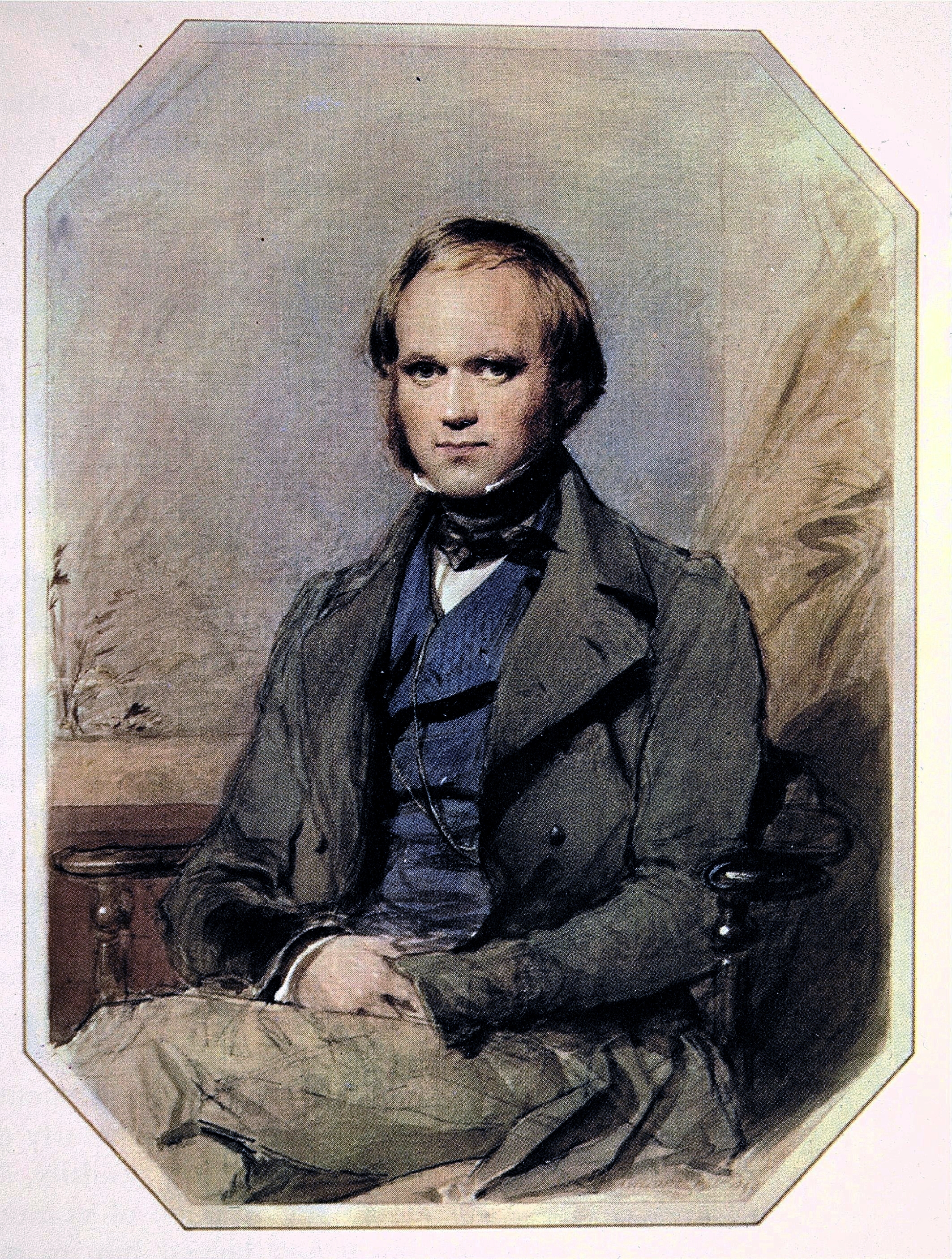
Image credits: Nick Risinger's conception of the Milky Way galaxy, from Wikimedia Commons, where you can also find an annotated version that shows where we live. The painting of Darwin (also from the Commons) is by George Richmond; Darwin sat for the portrait not long before he sailed on the Beagle.

Wednesday, November 4, 2009

The Multitasking Myth

I am not generally fond of using "myth" in the sense of "lie" or "untruth widely accepted as truth." (I much prefer the notion of myth as cultural storytelling and as a means of preserving cultural identity.) But since this particularly negative sense of the word is being applied to a phenomenon I find extremely deleterious to learning, I'm ready to go along on this one.

So here's the big question. Is it possible for people in general (and young people in particular) to engage in two or more activities at the same time and do any of them well enough to accomplish the purposes attached to each?

The answer seems to be, according to a resounding majority of researchers, "no."

My General Studies colleagues and I have been saved from some measure of dispute by the fact that our department has banned the use of extraneous technologies in the classroom: no laptops, no iPods, no mobile phones, no recording devices--at least without documents supporting ADA accommodation.

Students occasionally try to circumvent the policy by texting under the desk, but their demeanor is so obvious that I usually catch them and suggest strongly that they put the damned phone away and pay attention. As you can imagine, I'm very well loved for this. But it does make me wonder about students' priorities when they can't shut the "communication" devices off for an hour and a half.

I recently came across Rebecca Clay's article for the APA's online journal, Monitor on Psychology, "Mini-multitaskers." Her thesis is pointed, and reveals the fallacy inherent in the notion that young folk can work effectively on several assignments or tasks at a time.

Multitasking may seem modern and efficient, but research suggests that it slows children's productivity, changes the way they learn and may even render social relationships more superficial.

She provides evidence from recent studies that multitaskers do not save time, but actually take longer to accomplish individual efforts because they're not really doing them simultaneously; they're switching back and forth, and the switching adds time to the job rather than reducing it. And the more complex the job, the more time is lost.

As for my favorite in-class bit of naughty behavior, Clay notes that

Text messaging during class isn't just a high-tech version of passing notes. Because of its demands on attention, multitasking also may impair young people's ability to learn.

This is because, as research out of UCLA indicates, information is processed differently and less effectively when multitasking than it is when one devotes one's full attention to an activity. This may, in turn, exacerbate the problem already bequeathed us by the current emphasis in elementary and high school on rote learning. Dividing attention seems to make it harder for students to truly understand what is being taught; instead, they're more likely to respond by rote, able only to barf back what they've been told without digesting it. Sorry for the ugly analogy, but it's apt.

So, if we combine the short attention spans instilled in our kids by Sesame Street (90 seconds) and television commercials (30 seconds), with the superficiality of rote learning and a constant barrage of digital media (cell phones, iPods, Twitter, Facebook), why doesn't every student have ADHD?

According to Tamara Waters-Wheeler, a North Dakota school psychologist quoted in the article, attention problems are increasing and even if students aren't diagnosed with attention-deficit hyperactivity disorder, they're nonetheless exhibiting symptoms because they've grown up multitasking.

The evidence also suggests that the communities established by text-messaging and social networking may be much more superficial than face-to-face friendship. This is particularly important because as media-mediated friendships increase, the quality of these relationships will change the way we look at community, friendship, and other human interactions. The implications for cultural change are manifold. Clay quotes a developmental psychologist, Patricia Greenfield, who finds this multitasking version of friendship troubling:

We evolved as human beings for face-to-face interaction. As more and more interaction becomes virtual, we could lose qualities like empathy that are probably stimulated by face-to-face interaction.

Clay's is only one of myriad articles and blogs devoted to the emerging problems associated with short attention spans and media addiction. One of the best is from Blogger in Middle Earth, Ken Allen, a New Zealand educator whose post on "Binge Thinking" gets at the meat of the matter, which he describes as "cognitive overload."

In order to deal with this phenomenon, it's probably time to start rethinking how we present material to our students. Even in a fast-paced program like ours (cramming a semester's worth of information and learning into eleven weeks), and even in the face of ever more intense scrutiny by the assessment regime, we've simply got to figure out how to slow things down enough to help students change habits that they've acquired over the last twenty years.

Some of what I've read has inspired me to reduce the amount of information and increase the depth to which we explore it each quarter. This is a tough slog for fact- and information-based courses like art history, but in order to address problems associated with superficial learning (and its potential effect on creativity, which I'll address in a later post), some sort of new approach seems necessary. My students are already hinting at a solution: more workshops. My course-evaluation comments are rife with requests for more hands-on activities to connect theory and practice.

I can assure you, however, that I will address the issues one at a time, and use one medium at a time in order to develop some useful strategies. No multitasking will be employed in pursuit of solutions.

As they say in the funnies, "Stay 'tooned."

Image credit: Printed books will always be my medium of choice, but the updated British Museum Reading Room combines the old and the new so beautifully that I thought I'd encourage readers to check it out. The full resolution photo is available here. It was taken in February, 2006, by Diliff and uploaded in its present form to Wikimedia Commons in November 2008. When I mentioned the British Library last week, and wondered what the new library looked like, I hadn't realized that the old reading room still existed at its original site. Because of its marriage of printed codex and digital technology, this seemed like an appropriate illustration for this post. No short attention spans allowed in this place!