As more and more colleges agonize over the rising cost of textbooks, I would like to don my Swiftian hat here and make a modest proposal.
And, no, it has nothing to do with creating baby-skin lampshades.
Rather, I would suggest that institutions of higher learning get smart, talk back, and tell the textbook companies where to shove it.
I can say this because I never once used a "textbook," either as an undergraduate or a graduate student, at any of four major universities I attended: the University of California at Riverside, the University of Pennsylvania, the State University of New York at Stony Brook, and the University of Texas at Dallas. This represents a fairly wide geographical range, and both private (Ivy League) and public institutions. I also have to admit that I'm excluding Greek and Latin grammars from the category of textbook. In the interest of full disclosure, I must also confess that I suggest to my History of Art and Design students that they buy a comprehensive art history survey, much as I suggest that they also have a copy of a good dictionary; I refer to both, but teach from neither.
In fact, I probably need to clarify what I mean by "textbooks" (as opposed to "texts," which, as all good postmodernists know, include anything that can be interpreted): books intended to teach a subject in broad introductory terms, in schools or colleges. They typically do not contain much in the way of original research or interpretation, but rather categorize and summarize information. They may offer a broad perspective on a topic, provide condensed historical or practical information, and are supposed to represent a kind of state-of-the-subject picture, especially in fields commonly taught in liberal arts institutions: history, the sciences, maths, and the humanities. I contrast these with the monographs that made up my education: books by the likes of Homer, Joyce, Swift, Goethe, Morris, and even the four evangelists and the writers of the Pentateuch.
Textbooks also tend to be written by committee (not
necessarily a bad thing), profusely illustrated (also not necessarily a bad thing), and usually very expensive (in part because the aforesaid profuse illustrations and committees cost a great deal of money). They're also ubiquitous, and some colleges seem to be having fits about the cost of these books to students, and whether they should require them as actual or digital books. The proliferation of e-books and digital downloads makes it increasingly more likely that textbooks will become a permanent fixture in virtual reality, thus reducing the number of trees killed for spurious reasons--but the textbooks themselves will remain.
In addition, these books (especially the computer programming textbooks I used to illustrate the post) tend to contain material that becomes dated the minute new scholarship or new technologies emerge, so that they constantly need to be updated, new editions produced, and their prices increased, thus further exacerbating the problem. Since most software programs come with tutorials, why do instructors even need to assign textbooks in the first place?
So here's my solution. Nix 'em. Teach what you know, and write and develop your own materials. If you don't know the stuff, you shouldn't be in the classroom.
I saw one argument once that beginning teachers don't have enough experience to write their own curricula, and therefore absolutely must use a textbook written by an expert. If this is the case, what is it that they were learning in college or teacher-training programs?

I was told in a faculty development meeting just this week that I'm an expert. I sure as hell should be, after 190 graduate hours acquired during 15 years of full- and part-time schooling, not counting eight years of undergraduate education at top-notch schools. But what the facilitator meant is that we who teach are assumed to be experts in our fields. We've all got, at the very least, Master's degrees, and most of us have real-world experience related to what we teach. We all presumably spend many hours each year keeping up with current developments and advances in our subject areas, attend conferences, write peer-reviewed papers (or, in my case, blogs open to the scrutiny of any peers who happen by), participate in workshops, read monographs, subscribe to journals, and employ myriad other means to help us keep abreast and learn
new stuff.
In addition to all these traditional resources, there's now the Worldwide Web, with online material that expands daily, the quality of which seems to improving all the time. Thanks to my laptop, the internet, and my college's library, I can now access millions of peer-reviewed articles, read major world newspapers, subscribe to the
Chronicle of Higher Education, and commune with scholars and creative people all over the world. I can participate in virtual digs (I started out life as an archaeologist), read field reports, enjoy scholarly blogs, and take advantage of the
TED lecture series. One of the most promising aspects of all this is the technology that allows me to read books online that I would never be able to even see in person except under glass or with hard-to-acquire special permissions: the
Kelmscott Chaucer,
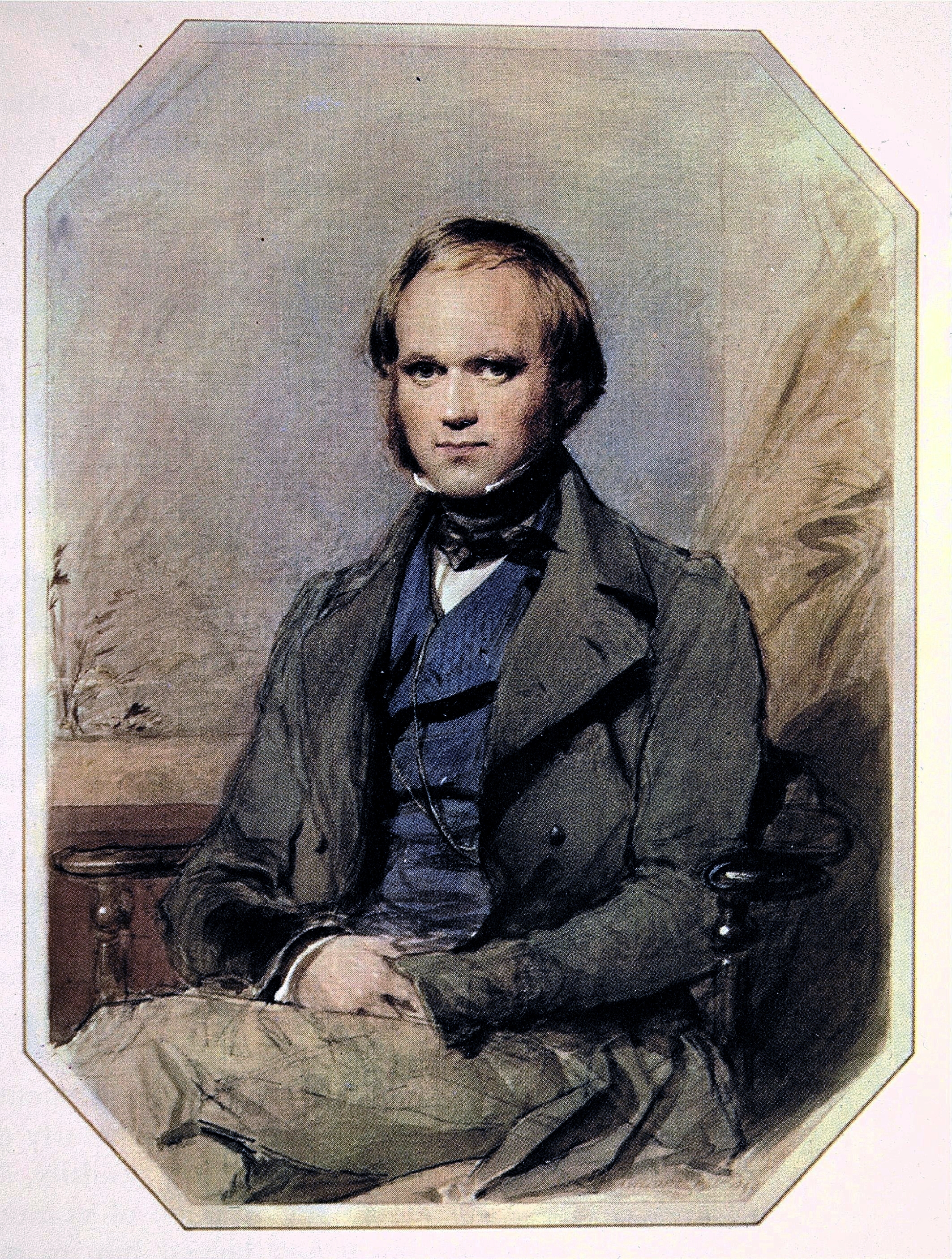
Darwin's notebooks,
Leonardo's sketchbooks. The means for perpetual learning are now quite literally at our fingertips.
So why are so many people so bent out of shape about spending preposterous amounts of money on textbooks good teachers don't really need? If we are indeed well-prepared enough to be "experts," why can't we be trusted to gather the material we need to teach our students what they need to know or, better yet, to provide them with the tools that make it possible for them to participate energetically in their own learning?
I suspect that there are several answers to these questions. Some beginning college instructors don't feel confident enough to strike out on their own, preparing their own lessons and assigning their own choices of primary texts and secondary works that could generate questions they might not be able to answer. If we're assumed to be experts, after all, we can't
not know the answers. Although I'm not sure why the notion of "expert" implies "omniscient," this does seem to be a prevailing sentiment. And it creates a problematic model in the mind of the student: there is
an answer; once we know it, we don't have go any further.
Another reason, I hesitate to mention for fear that I might sound accusatory, is intellectual laziness, which seems to be endemic in some schools these days. It's too much trouble to do all that work analyzing and collecting suitable readings. Why not order a textbook, where somebody's already done all that work for you? It's much more time consuming to select works and readings by great writers and thinkers, to locate ancillary materials, to search for appropriate websites in the growing pantheon of content-loaded interactive pages.
Oddly enough, though, it's considerably cheaper. A few paperback copies of significant works and PowerPoint slides built from images freely available on the web or through one's college library might well provide the basis for a top-notch humanities class. Surely the original works, some commentary, and some explication on the teacher's part, and a lot of healthy discussion and research would be far more interesting than slogging through chapter upon chapter of textbook condensations or pre-selected readings.
Still another explanation is the problem of suspicion or ignorance on the part of authorities--those in charge of running the show. An administration may have hired us, but because few of those who hire know what we know, they may not trust us enough to afford the kind of academic freedom that allowed us to become the well-trained, academically qualified, committed teachers that we are in the first place.

I fully realize that the academic world in which we now live is
not the one in which I was educated. My teachers all knew well of what they spoke; they lectured, we took notes, asked questions, conducted research, wrote papers, discussed those papers, responded to critical assessments, and graduated from college and graduate school having learned the way people have learned ever since the idea of the university began in the Middle Ages.
That model is increasingly under attack in a world that demands interactivity, instant gratification, and entertainment--as well as "accountability" (which I suspect is engendered by our also increasingly litigious society). I quail to think of what high school is like these days after having read a feature essay in today's
Daily Poop by a high-school Junior who likes the idea that libraries are now noisy, because it means that people have
finally learned how to mix education with entertainment. I'm not sure how forty years of
Sesame Street fits into her world. Maybe she missed it.
Ye gods and little fishes! What brave new world
is this that has such people in it?!
For the moment, I'm out of steam. But I'll return for another chapter soon, perhaps with some suggestions for how to do what I say we
should be doing.
Image credits: A row of computer textbooks uploaded by K.Lee; A detail from Jan van Eyck's The Madonna and the Canon Georg van der Paele, 1436; and Carl Spitzweg's wonderful The Bookworm, 1850 (I have a print in my study). All from Wikimedia Commons.


.jpg) Tom Friedman has a way with words, choosing pithy combinations to describes equally pithy phenomena. Not only is the world as he describes it hot, flat, and crowded, but we're now suffering from the best possible term for our current climate situation: Global Weirding.
Tom Friedman has a way with words, choosing pithy combinations to describes equally pithy phenomena. Not only is the world as he describes it hot, flat, and crowded, but we're now suffering from the best possible term for our current climate situation: Global Weirding.